This sounds obvious until a production incident happens.
Imagine a distributed storage system maintaining three copies of every block.
A disk fails.
No problem.
A host fails.
Still okay.
Then an administrator deletes the wrong virtual machine.
The storage system performs its job perfectly.
The deletion is reflected across the infrastructure.
Redundancy worked.
Recovery didn't.
This is why we need to separate four concepts:
High Availability
Keeps workloads available after infrastructure failures
Replication
Maintains redundant copies of current data
Snapshots
Provide convenient points in time inside a storage or virtualization system
Backup
Provides independent recovery points
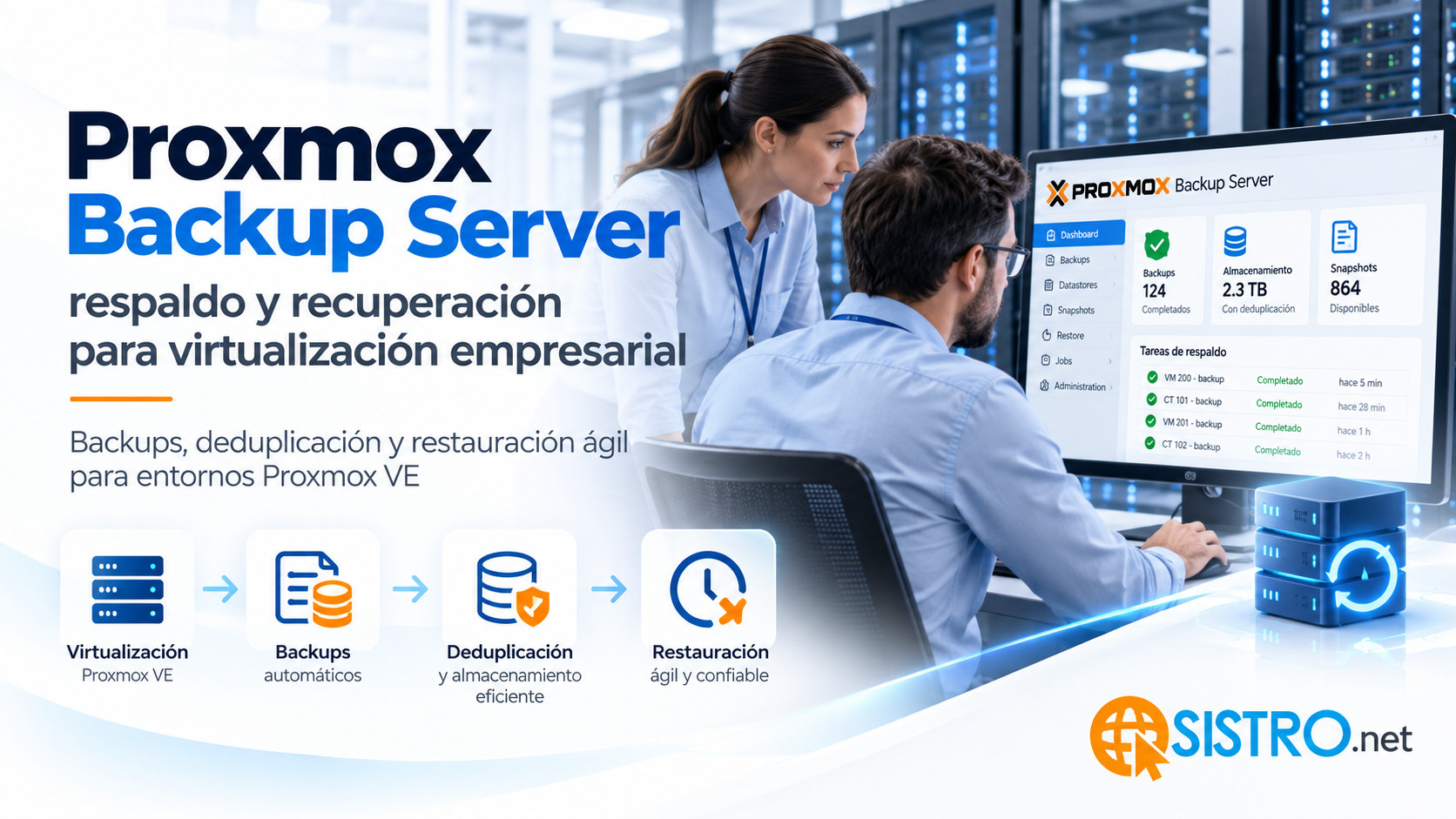
Proxmox VE + Ceph + Proxmox Backup Server provides a useful real-world example of these layers.
PBS also adds an interesting efficiency model.
Data is transferred incrementally and deduplicated server-side, while each backup snapshot still represents a complete logical recovery point.
But the technology isn't the hard part.
The hard questions are:
What is the RPO?
What is the RTO?
Where is the second copy?
Who can delete backups?
When was the last restore test?
Backup architecture starts with those questions.
Practical example:
https://sistro.net/blog-tienda-sistro/proxmox-backup-server-respaldo-recuperacion
Tags: backup proxmox disaster-recovery sysadmin
About the author
- Enterprise cybersecurity solutions, Fortinet firewalls, and network security infrastructure for businesses. https://sistro.net
Comments
Join the discussionNo comments yet. Be the first to comment.