A user says:
“The application worked yesterday.”
You enabled TLS inspection.
Today it fails.
The application isn't necessarily broken.
The firewall isn't necessarily broken either.
The trust model changed.
With normal TLS:
Client → Server Certificate → Trusted CA
With TLS interception:
Client → Inspection Gateway Certificate → Enterprise CA
Some applications accept the new trust chain.
Others use stronger assumptions, including certificate pinning.
Those applications may reject the connection.
This is why TLS inspection deployments require more than networking knowledge.
You need to think about:
PKI
Can you distribute the enterprise CA?
Endpoint ownership
Do you control the device?
Application behavior
Does it use certificate pinning?
Exceptions
Can you bypass only the exact service that fails?
Performance
Can the security gateway handle the decryption workload?
The best TLS inspection policy is rarely:
Inspect everything.
It is:
Inspect what provides meaningful security value and document every exception.
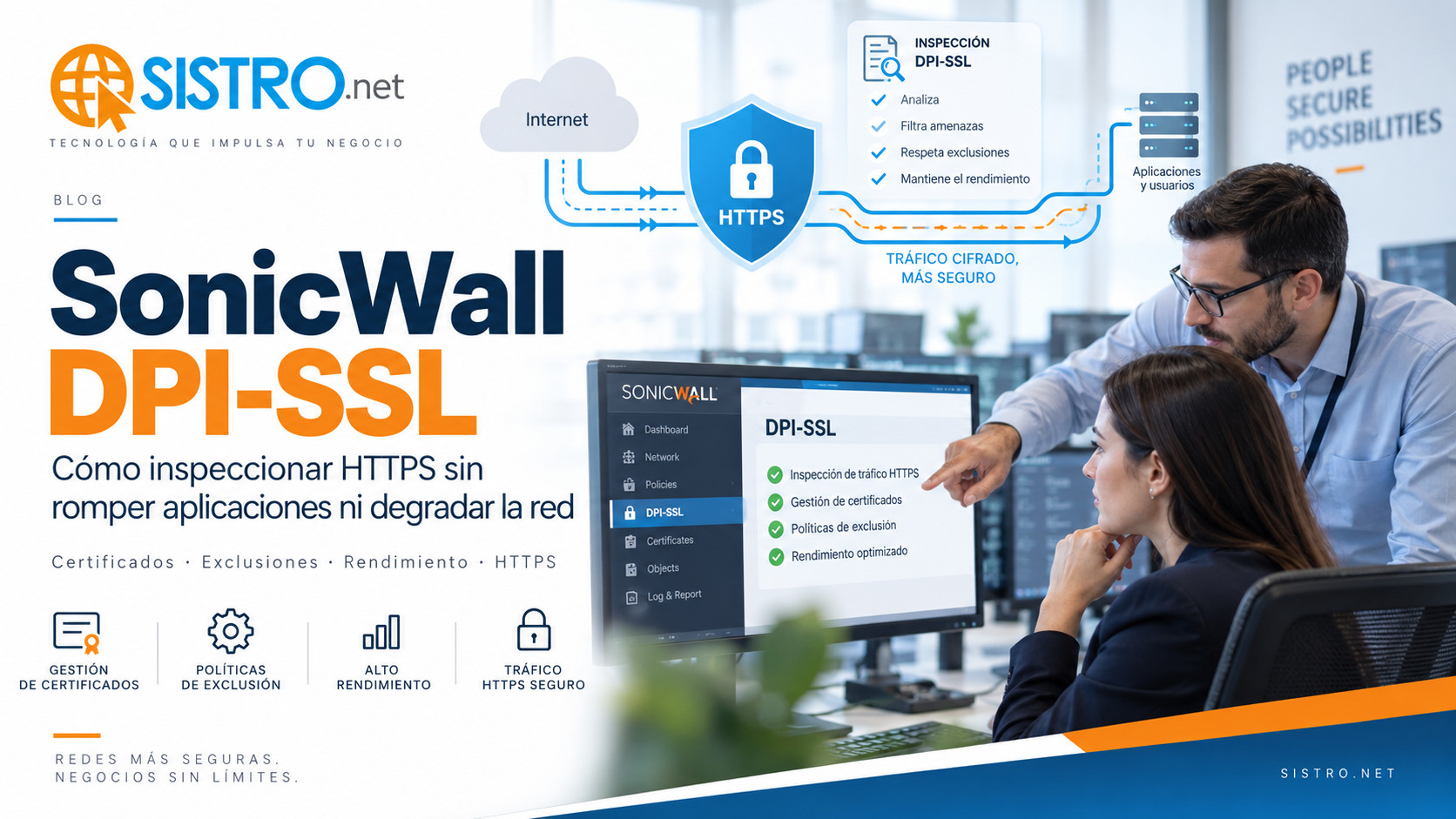
I used SonicWall DPI-SSL as the practical implementation example here:
https://sistro.net/sonicwall-dpi-ssl-inspeccion-https
Tags: tls cybersecurity sysadmin network-security
About the author
- Enterprise cybersecurity solutions, Fortinet firewalls, and network security infrastructure for businesses. https://sistro.net
Comments
Join the discussionNo comments yet. Be the first to comment.